Shepherdsville drywall repairs often start with a practical question: after the damaged board is replaced, can the texture be matched well enough that the patch stays quiet after paint? Around Bullitt County, that question comes up after basement moisture, plumbing access cuts, ceiling stains, door-ding clusters, and remodel tie-ins. The answer depends less on a magic spray pattern and more on diagnosis, dry conditions, surface prep, and how far the texture blend is allowed to travel.
This guide focuses on Shepherdsville drywall texture matching for homes near I-65, KY-44, KY-61, the Salt River corridor, and 40165 neighborhoods where basements, garages, and lived-in rooms can show a mix of old orange peel, knockdown, patched seams, and repainted walls. A clean patch is not just a square of drywall and a can of texture. It is a sequence: stop the source, stabilize the repair, build the finish flat, test the pattern, prime it, and check it in the same light the room will actually use.
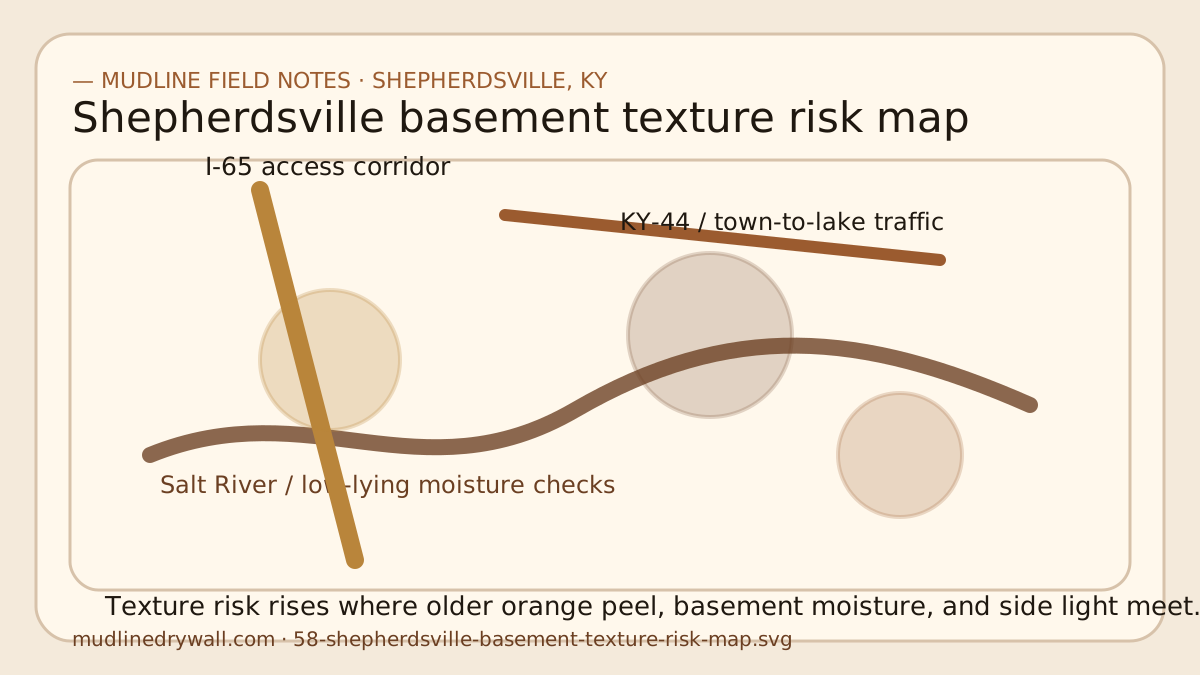
Why texture repairs show up after paint
Most patch complaints happen because the repaired area is technically covered but visually different. Texture has profile, density, direction, edge softness, and paint absorption. If the old wall has ten years of roller stipple and the new patch has a fresh spray pattern with sharp edges, the repair can show even when the color matches. If the compound edge is too tight, the wall may look flat in the afternoon and then show a rectangle at night under a lamp.
Shepherdsville homes add another layer: many projects are not full-room remodels. They are targeted fixes after a water heater issue, an appliance leak, a basement seepage correction, a bath fan problem, or a small renovation. That means new drywall has to live beside older surfaces. The goal is not to pretend the wall is brand new; the goal is to control the transition so the eye does not catch the repair every time light crosses it.
Texture matching also changes by room. A basement family room with lower light may tolerate a slightly different blend than a stair wall beside a window. A garage wall can be practical and durable. A living room or finished basement with low-sheen paint may need a wider feather and a primer reveal check. Good planning separates those situations before work starts.
Start with moisture before texture
For water-damage repairs, texture is the last step, not the first. If the source is still active, a beautiful match can fail quickly. Before replacing board, the leak or moisture path should be handled: plumbing fixed, exterior drainage reviewed, wet insulation removed where needed, and the cavity allowed to dry. Drywall compound and texture do not solve trapped moisture.
In basement areas near the Salt River corridor or lower sections around Shepherdsville, moisture questions deserve extra attention. Not every stain means an active leak, but every stain should be treated as a clue. Is the board soft? Is the paper delaminating? Does the base trim show swelling? Is there a musty odor? Did the issue happen once during a plumbing event, or does it appear after heavy rain? Those answers shape the cutout size and whether the repair can be small or needs a broader removal.
Once the substrate is dry and stable, texture matching becomes more predictable. The patch can be backed properly, seams can be taped without movement, and finish coats can dry at a normal rate. Rushing texture onto damp or questionable material is how small repairs become repeat visits.
Cutout size affects the final blend
Homeowners often want the smallest possible cutout, which makes sense from a disruption standpoint. But the smallest opening is not always the cleanest finish. A tiny patch can be harder to blend because the texture transition sits right next to the repair. A slightly larger, cleaner cut with solid backing can sometimes finish flatter and texture more naturally.
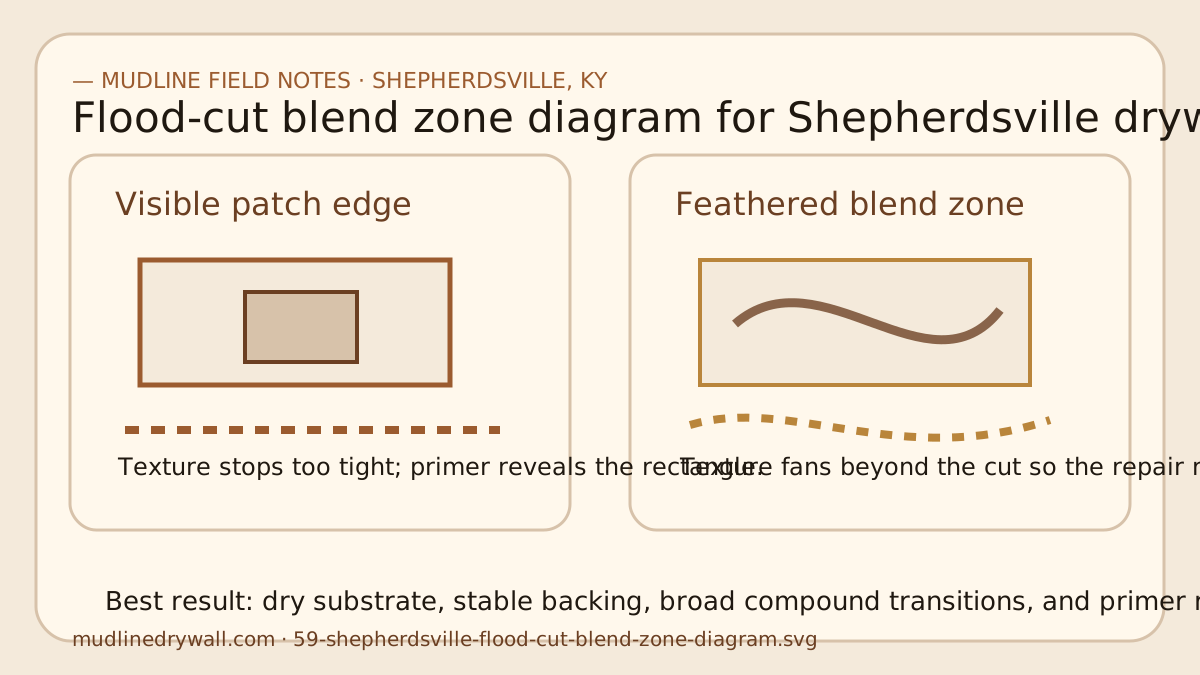
For flood-cut style repairs, the horizontal line matters. If drywall is removed along a long wall, the new seam can become a visible stripe unless the finish and texture are planned beyond the board replacement line. The compound feather should travel out from the joint. The texture should fan wider than the patch. Primer should reveal whether the blend is reading as a line before final paint locks it in.
For plumbing access holes, the issue is often the opposite: a small rectangle cut between studs. If the backing is weak or the patch sits proud, no texture can hide the edge. The board must sit flush, the tape must be controlled, and the first coats should build the wall plane before anyone thinks about orange peel or knockdown.
Match the texture family before the texture size
Texture matching starts by identifying the family. Is the existing surface light orange peel, medium orange peel, knockdown, stomp, skip trowel, roller stipple, or a hand-built texture from a previous repair? After that, the crew can compare profile size, spacing, and how the texture lays under paint.
Orange peel depends on droplet size and density. Knockdown depends on spray amount, wait time, and the pressure used to flatten the peaks. Hand textures depend on tool movement and rhythm. Roller stipple may be more paint-build than true texture. A patch can fail when the new material copies the biggest obvious bumps but ignores the field around them.
That is why sample testing helps. A small test on scrap board or an inconspicuous area can dial in pressure, nozzle, compound consistency, and knockdown timing. It also gives the homeowner a realistic expectation before the visible wall is textured.
Lighting is part of the repair
Texture looks different under different light. Side light from a basement egress window, a hallway fixture, or a lamp against the wall can reveal ridges that overhead light hides. Shepherdsville homes with finished basements often have mixed lighting: recessed cans, lamps, small windows, and TV-wall glare. The repair should be checked in the light the room actually uses, not only with a work light during application.
We like primer reveal because it separates finish quality from paint color. Primer gives a more uniform base and makes texture differences easier to see while there is still time to adjust. If the repair is visible after primer, that is the moment to correct an edge, skim a transition, or soften a texture band. Waiting until final paint usually makes the fix more expensive and more disruptive.
Paint sheen matters too. Flat and matte paints are more forgiving than satin or higher-sheen products. Dark colors and strong side light are less forgiving. If a Shepherdsville repair is on a feature wall, stairwell, or long basement wall, finish expectations should be higher than for a utility closet.
Dust control without overpromising
Drywall is a dusty process — we do not pretend otherwise. For occupied Shepherdsville homes, the smart move is containment and daily cleanup, not promises that no dust will exist. Plastic, floor protection, zipper entries where needed, controlled sanding, and clean work habits can reduce spread. You may still see some dust, but the goal is to keep it managed and away from the rest of the house as much as practical.
This matters most in finished basements, stair paths, and main-level rooms where family life continues around the repair. Before work starts, move soft goods when possible, protect electronics, and clear access from the door to the repair area. A little prep makes the texture and cleanup phase go smoother.
Shepherdsville quote prep: what to send
If you want a more useful quote, send wide photos and close photos. The wide photo shows room light, wall length, ceiling height, and access. The close photo shows texture profile, paint condition, and damage edges. For water damage, include what caused it, whether the source is fixed, and when it happened. If the repair is in a basement, note whether the area is fully dry and whether trim, flooring, or insulation was affected.
Also send rough dimensions. For a wall patch, measure the damaged area and the broader wall section. For a ceiling stain, include the room size and ceiling height. For a flood cut, measure linear feet and height of removed material. Those details help a drywall contractor in Shepherdsville decide whether the project is a small patch, a multi-area repair, or a larger blend-and-paint handoff.
When to repaint the whole wall
Sometimes the best texture match still needs a full-wall repaint. Paint ages, absorbs differently, and changes with sunlight, smoke, cooking, humidity, and cleaning. If the existing paint is older, a spot paint can flash even if the texture is handled well. Repainting corner-to-corner gives the eye a natural stopping point and often produces a cleaner finished room.
This is especially true on long basement walls, stairwells, and rooms with side light. A corner-to-corner paint plan may feel like extra scope, but it can prevent the “patch looks good but I can still see where it was painted” problem. Texture matching and paint planning should be discussed together.
Common Shepherdsville texture repair scenarios
Basement moisture cutouts: These need source control, dry verification, careful board replacement, and a wide texture blend. If the wall was previously painted multiple times, roller stipple may be part of the final look.
Ceiling stains below plumbing: Ceiling texture is sensitive because light rakes across it from fixtures and windows. The patch should be feathered broadly, and the texture sample should match both pattern and density.
Remodel tie-ins: New openings, removed walls, and relocated doors create transitions between old and new surfaces. These benefit from early planning so seams are not placed in the most visible light path.
Garage and utility repairs: These can be more practical, but they still need solid backing and durable finish. Fire-rated walls or garage separations may require specific board type and assembly details.
Bottom line: texture matching is a process, not a product
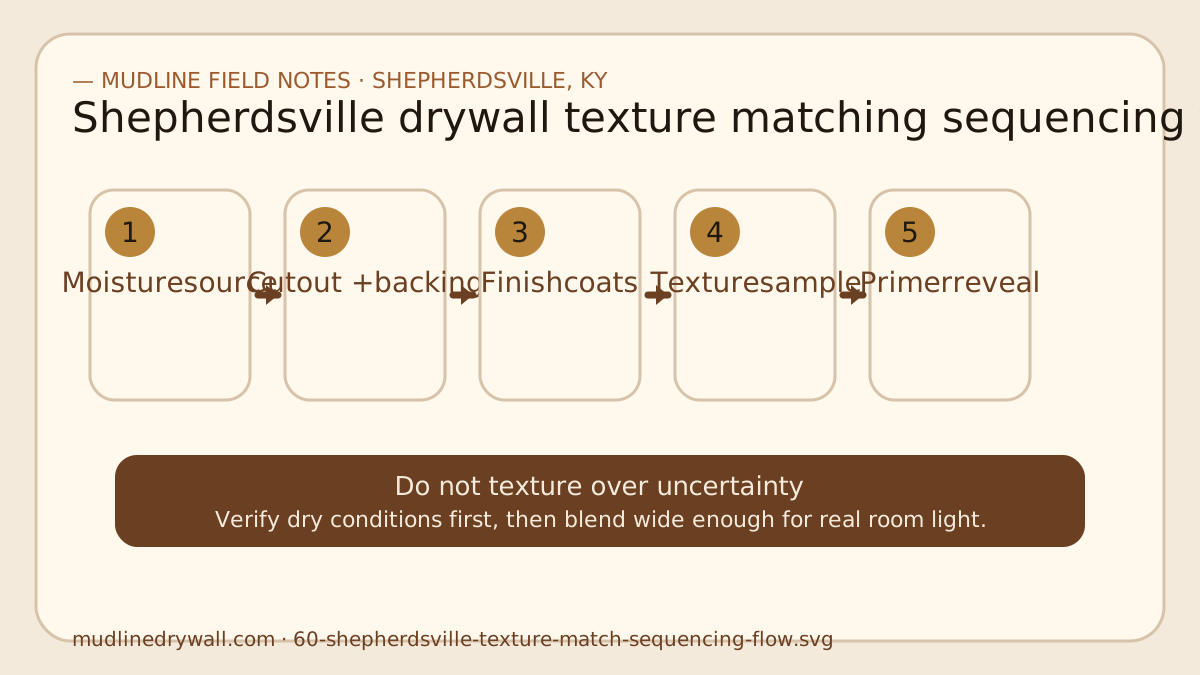
A good texture match in Shepherdsville is built through sequence. Fix the source. Replace damaged board cleanly. Tape and finish flat. Identify the texture family. Test the pattern. Blend wider than the cutout. Prime and inspect before final paint. That is how basement repairs, ceiling patches, and water-damage cutouts move from obvious to quiet.
If you are planning a drywall repair near I-65, KY-44, KY-61, Cedar Grove, Hillview, Hebron Estates, Brooks, or central Shepherdsville, gather photos and measurements before you call. The clearer the scope, the clearer the quote.
Need texture matching in Shepherdsville? Send Mudline the project details and we’ll return a practical written quote for the repair, finish, and paint-ready handoff.
Shepherdsville texture matching FAQs
Can a drywall patch texture be matched exactly?
Sometimes it can be very close, but exact matching depends on the old texture, paint age, lighting, and wall condition. The best approach is to blend wider than the patch, test the pattern, prime, and inspect before final paint.
Should water-damaged drywall be textured before it is fully dry?
No. The moisture source should be corrected and the area should be dry before board replacement, finishing, or texture. Texture over damp material can fail and may hide a larger problem.
Why does my patch still show after paint?
Common causes include a tight compound edge, mismatched texture density, older paint flashing, side light, or a patch that was not primed and inspected before final paint.
Do Shepherdsville basement repairs need a wider blend zone?
Often, yes. Basement walls can have mixed lighting, older paint, moisture history, and long sight lines, so a wider blend zone usually helps the repair read quieter after paint.