Shively patches show up because the walls are long and the light is ordinary
Shively repairs often look fine under a work light and obvious the next afternoon. Dixie Highway ranches and the streets off 7th Street Road and Cane Run have long, plain walls and windows that hit them at a shallow angle. A filled hole can be structurally sound and still read as a rectangle once the room is back to normal daylight. That is a texture and sightline problem, not a sign the patch failed.
The useful scope names the wall, the existing texture, and the view from the doorway. Square footage alone does not tell you whether a Shively living-room patch will disappear. A closet back wall and a Dixie-facing picture window are different jobs even when the hole is the same size.
Identify the texture before you price the blend
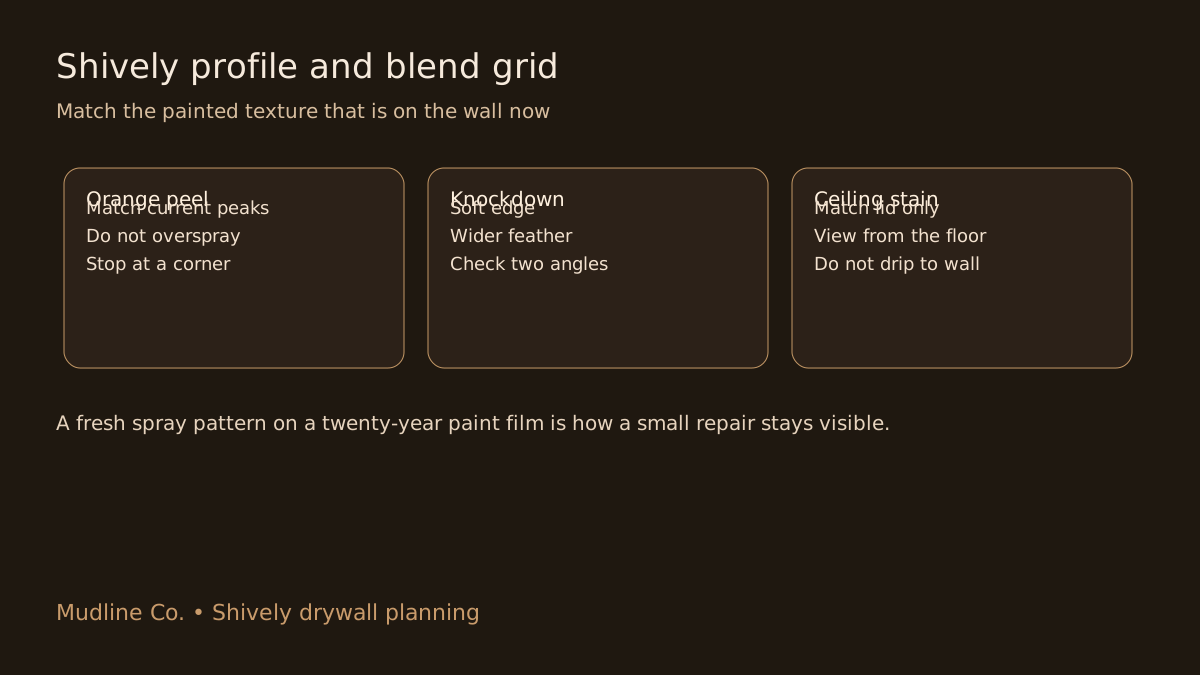
Most of these houses carry orange peel or a light knockdown that has been softened by several coats of paint. A smooth mud plug in the middle of that field will flash. Match the profile you can see now, not the profile the house had when it was built. Paint film changes the peaks. If you copy a fresh spray pattern onto a wall that has been rolled for twenty years, the patch looks newer than the room.
Do a small test in a lower corner when the profile is unclear, then look at it after primer. That ten-minute loop is faster than spraying the whole repair and chasing it. Note whether the ceiling texture matches the wall. In a lot of Shively capes they do not, and a wall method copied onto the ceiling is how a small stain repair becomes a visible circle.
Blend width follows the sightline, not the hole
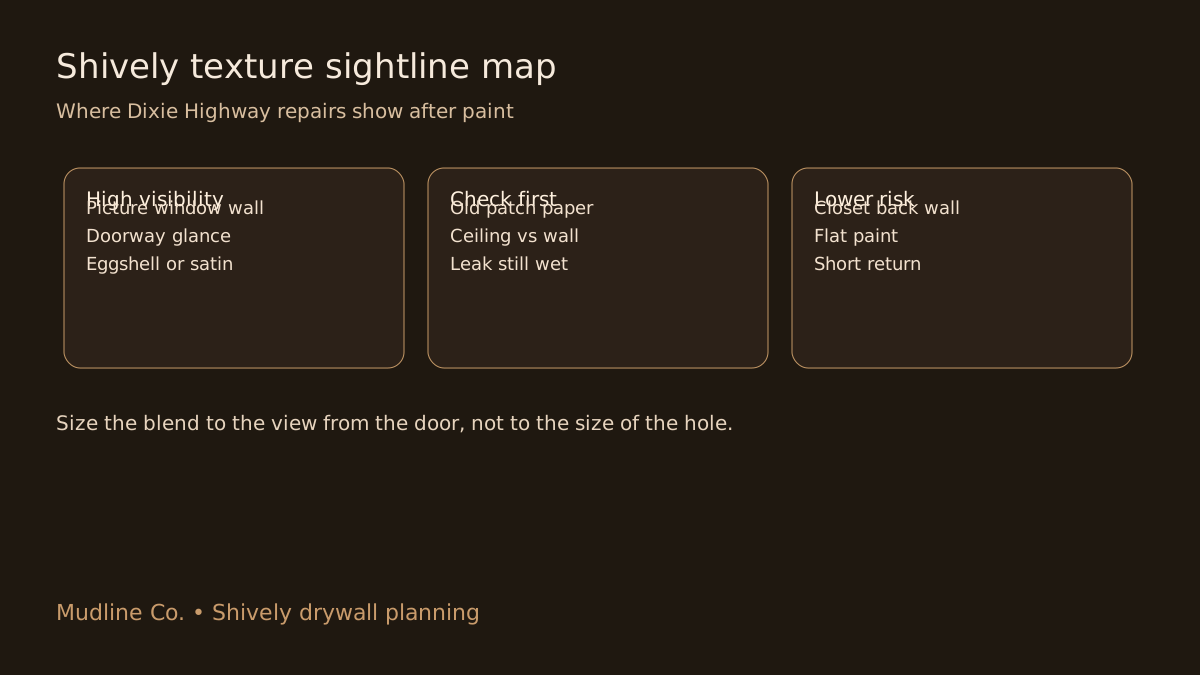
A narrow feather can close a utility-wall nick. It will not close a patch on a wall you see in one glance from the front door or the kitchen pass-through. Size the blend by how the room is used. If people walk past the wall every day, widen the transition and soften the edge so there is no hard line where new texture starts.
Butt the blend into a corner, a window return, or the top of the base when you can. Stopping a texture change in the middle of an open plane is what makes Shively repairs show after paint. The hole can be four inches. The quiet zone may need to run to the next break in the wall.
Older board and old patches need a cut-back, not another skim on crushed paper
These houses have been patched before. A second repair on soft, crushed paper will telegraph no matter how careful the texture is. Cut back to solid board, add backing if the opening is larger than a nail hole, and keep the new joint off the exact scar of the last patch when the framing allows it.
If the damage is from a doorknob, a moved curtain rod, or a TV mount, say so. Those hits are usually dry and local. If the stain came from a window or a roof leak, the texture work waits until the paper is dry. Closing a damp Shively wall and then matching texture is how the same rectangle comes back in the spring.
Side light along Dixie Highway is the inspection that matters
Overhead bulbs in these living rooms hide edges. Late-day light down a Dixie Highway front wall, or morning light from a side yard window, does not. Walk the patch from the entry and from the sofa, not only from a ladder straight on. If it reads as a boundary from either of those views, the blend is not finished.
I-264 traffic noise does not change the wall, but the window orientation on these lots often does. Houses with the long wall toward the highway or toward an open side yard need a wider, softer edge than an interior bedroom with one small window. Put that in the note so the quote matches the room.
Sheen will either hide the work or advertise it
Flat and matte are more forgiving on orange peel that has already been painted a few times. Eggshell shows more. Satin on a long Shively wall will outline a blend that looked acceptable in the estimate photo. If the homeowner wants a wipeable kitchen or hall, the blend has to be planned for that sheen before the price is treated as final.
Ask for the sheen in the first message. If it is undecided, the written scope should say which walls assume a forgiving paint and which walls need a wider blend if the sheen goes up. That sentence prevents the callback that starts with the paint making a good patch look worse.
Occupied houses on tight lots need a real dust plan
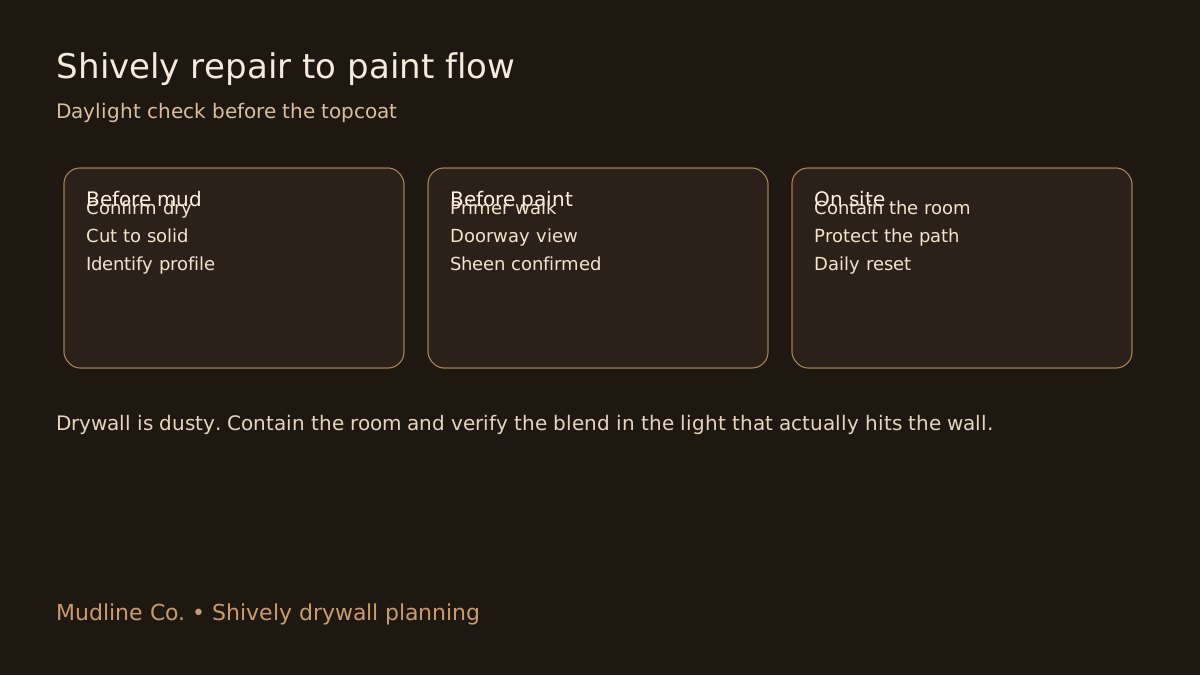
Drywall is a dusty process. A texture match means sanding, and sanding moves dust. Shively lots and interior stairs are tight. The path from the door to the wall is part of the job. Plastic at the room opening, floor protection on the walk, and a daily reset are the standard. We do not promise the rest of the house will look untouched.
If the repair is in a room the family uses at night, say when that room is offline. A blend that is technically correct and traps the living room for an unstated extra day feels like a bad repair. Schedule the dusty block, then the primer check, then paint. Do not sand between those steps as a surprise visit.
Ceilings and lid lines in these ranches
A ceiling stain over a Shively living room is often a different texture than the wall below it. Match the ceiling on its own. Check it from the floor at the far side of the room, because that is where people notice a circle around a former leak. A ladder view straight up will lie to you.
If the ceiling texture is heavy and the wall is light orange peel, do not let the ceiling blend drip onto the wall. Stop at the corner. A mixed profile in the corner reads as damage even when both fields were matched correctly on their own.
What to send so the quote is not a guess
Send one photo of the whole wall from the doorway, one close photo of the damage, and one photo in the light that bothers you if you have it. Add the paint sheen if you know it, whether anyone is living in the house, and whether the leak or the impact is finished. Dixie Highway, 7th Street Road, or Cane Run is enough location context to plan the visit.
If a previous patch is already in that wall, say so. We would rather cut back once than skim over a soft spot and discover it at primer. The written quote should separate drying, backing, texture match, and the paint-ready walk so nobody hears a one-visit price for a wall that is still wet.
Handoff before the topcoat
Primer is the quality gate. Walk the blend after primer from the same two angles you will use at the end: the doorway and the main seat in the room. Touch up then, while the correction is still cheap. Once the laundry is reset and the furniture is back, a return trip costs more than the original feather.
Leave a short note if a pipe, a window, or a corner limited how far the blend could go. Painters can work with a known limit. They cannot work with a ridge they find after the first finish coat. That is the closeout that keeps a Shively patch quiet: solid board, matched profile, a blend that reaches a break in the wall, contained dust, and a daylight check before paint.
The practical standard on these streets
Shively does not need a custom-home finish speech. It needs the existing texture identified, the blend sized to the real view, and the sheen agreed before anyone calls the wall paint-ready. Do that and a repair on a Dixie Highway ranch stays in the wall instead of announcing itself every afternoon.
If you have a patch that still shows, send the doorway photo and the sheen. Mudline will return a written texture-match scope for that wall, not a generic square-foot allowance that ignores the light.
Common questions
Why does a Shively drywall patch show after paint?
Usually the texture edge or the sheen is showing the boundary, not a structural failure. Blend width and a daylight check matter more than the size of the hole.
Do you match orange peel and knockdown?
Yes. We match the profile that is on the wall now, including paint buildup, instead of copying a brand-new spray pattern onto an older surface.
Can you work while the house is occupied?
Yes. Drywall is a dusty process, so we contain the room, protect the walk path, and reset daily. Expect managed dust, not a dust-free repair.
What photos help the quote?
A doorway photo, a close photo of the damage, and a side-light photo if you have one. Add sheen and whether any leak is already fixed.