Utility-room cutouts are a different repair than a nail hole
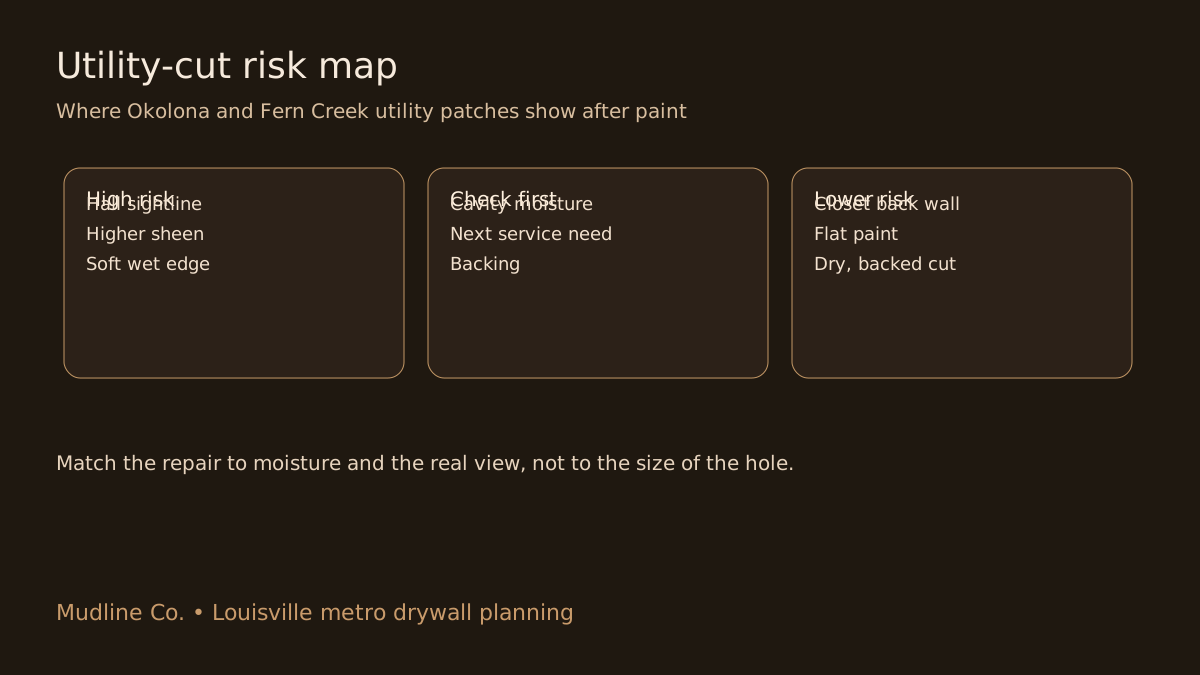
Okolona and Fern Creek calls often start the same way: a plumber or electrician opened the wall to reach a water heater, laundry valve, or panel, and the patch still reads as a rectangle after paint. The board may be tight and the screws set. What shows is the edge. South-end houses along Preston Highway, Outer Loop, and Beulah Church Road have a lot of utility closets that sit on the same plane as a hallway or laundry door, so a small access cut becomes a daily sightline.
Treat these as moisture-and-access repairs, not cosmetic fills. The first question is whether the wall is dry and whether the next trade still needs that opening. Closing a wet cavity, or closing one that the plumber will reopen on Friday, wastes the finish. A written scope should say what was cut, what stays accessible, and what has to disappear into the existing texture before primer.
Moisture checks come before any mud
Water-heater and laundry leaks leave a stain that looks finished long before the paper and studs are dry. In Fern Creek basements and Okolona slab homes, we see the same pattern: the visible drywall is replaced, then a tide line returns at the base because the cavity was closed on a damp plate. If a meter or a simple plastic-sheet test still shows moisture, the repair waits. Painting over a damp patch does not make it a paint-ready wall.
Ask where the water went, not only where the hole is. Supply lines, drain pans, washing-machine hoses, and condensate lines can wet the wall two studs away from the obvious cut. Photograph the cavity before it is closed. That record helps the homeowner, the plumber, and the painter agree on what was actually repaired.
Size the cutout to the damage, not to the tool that made it
A 6-inch access hole is rarely the right repair size if the paper is swollen or the edge is crushed. Cut back to solid board, land the patch on framing or add backing, and keep the new joint off the exact line of the old hole when you can. Square, backed patches with a planned feather almost always read quieter than a stuffed opening with compound piled at the perimeter.
Utility rooms also collect screws, pipes, and outlet boxes that limit how wide a feather can go. Call that out in the scope. A patch jammed between a water heater and a door casing needs a different blend plan than an open hallway wall. Pretending every cutout can take a 24-inch feather creates a quote that does not match the room.
Texture matching is what makes the repair stay quiet
Most Okolona and Fern Creek houses in this corridor carry orange peel or a light knockdown, sometimes softened by several paint films. A smooth mud plug in the middle of that field will flash under the laundry light and under daylight from a nearby window. Match the profile first: peak size, softness, and how far the old texture already fades toward the trim.
Then set the blend zone by sightline, not by the patch dimensions alone. A closet back wall can take a tighter edge. A laundry opening that faces a kitchen pass-through usually needs a wider, softer transition. Check it from the doorway and from the working position at the washer, not only from a ladder straight-on.
Access panels are sometimes the honest finish
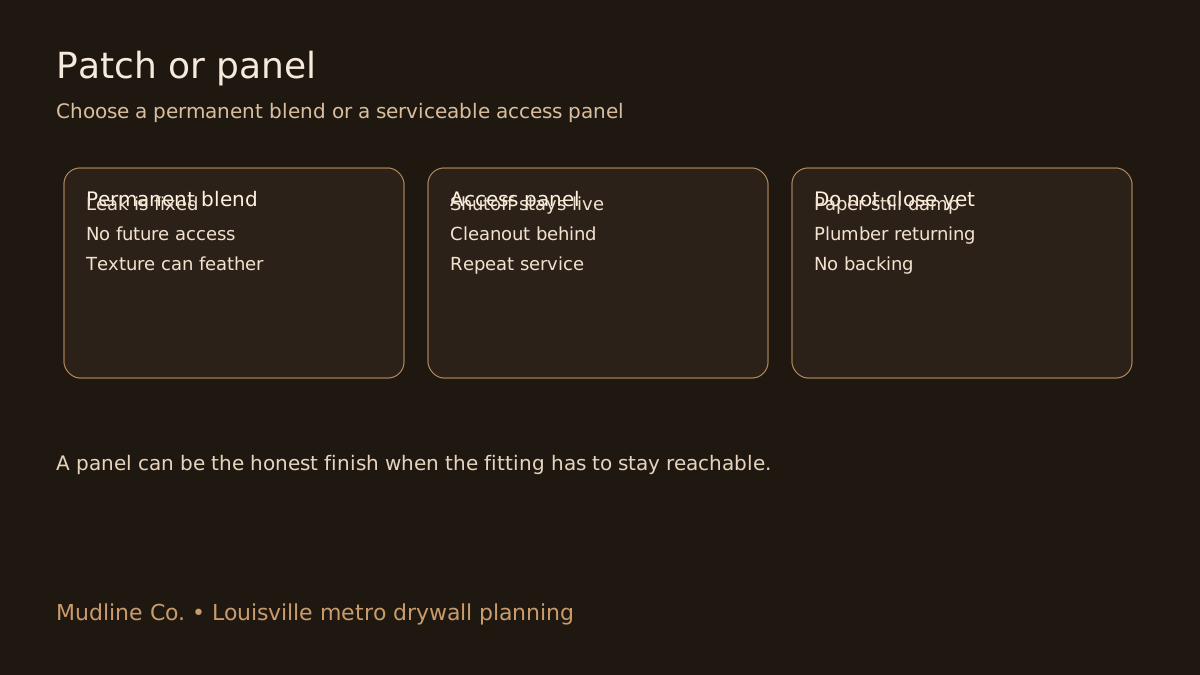
Not every utility cut should vanish. If the water heater, cleanout, or shutoff will be serviced again, a painted access panel can be the better scope. Forcing a permanent patch over a fitting that the next plumber will open is how homeowners pay for the same wall twice. Say that plainly in the quote: permanent blend, or serviceable panel, and why.
When a panel is the right call, finish the surrounding field so the panel is a decision, not a scar. Square the opening, ease the edges, and keep the texture consistent up to the frame. That reads as planned access. A ragged cut with a cover plate screwed into broken paper reads as unfinished work.
Dust control in occupied laundry and utility spaces
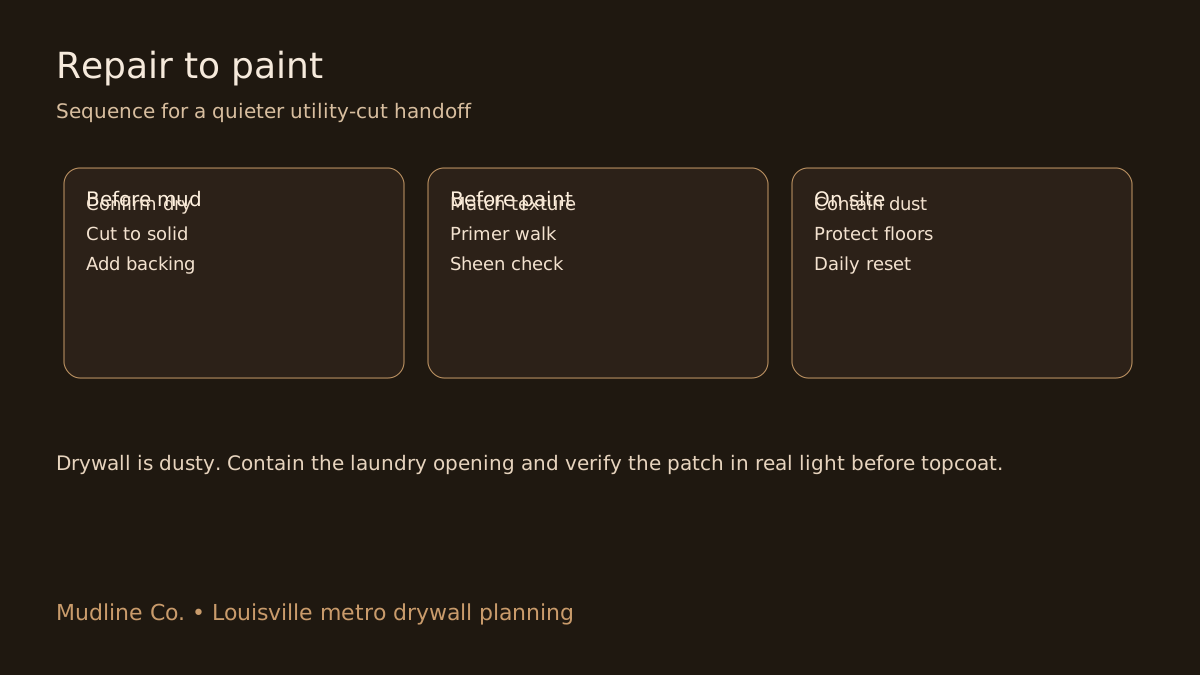
Drywall is a dusty process. We do not pretend a sanding pass in a laundry room leaves the house untouched. What we do is contain it: plastic at the doorway, floor protection, a controlled sanding method, and a daily reset so the washer and the path to it stay usable. Okolona and Fern Creek jobs are often occupied. The schedule should say which hours the utility room is offline.
Tell people to expect some dust at the barrier and none of the fantasy that a repair leaves zero trace in the air. Managed dust is the standard. If the home has a return near the laundry, cover it before sanding. That one step prevents the repair from announcing itself in rooms that were never opened.
Primer is the quality gate, not a formality
Utility patches fail in the topcoat when nobody looked at them under the room’s real light after primer. The overhead bulb in a laundry closet hides edges that a side angle from the hall will show. Walk the patch after primer, from the doorway and from the adjacent room, before anyone commits to sheen.
Higher sheen makes a tight utility patch less forgiving. If the laundry or hall is going satin, say so before the blend width is locked. A flat utility-room paint can hide a modest transition that eggshell in the connecting hall will not. Sheen is a drywall input on these cuts, not a painter-only detail added at the end.
What to send for a faster written quote
Send a photo of the open or patched cut, a wider photo that shows the water heater or laundry context, and a note on whether the leak is fixed. Add the street context if you know it — Preston Highway side, Outer Loop, Fern Valley, or Beulah Church Road — and whether the house will be occupied. If an access panel must stay, say that in the first message.
Timeline matters here more than square footage. A same-week close after a water-heater swap is a different sequence than a patch that can wait for full dry time. The written quote should separate drying, backing, texture, and paint-ready handoff so nobody assumes one visit closes a wet cavity.
Handoff so the painter is not guessing
A clean handoff lists the cut locations, whether each one is a permanent blend or a panel, the texture profile, and the walk path used for acceptance. Include a short note if a stud or pipe limited the feather. Painters can work with a known limit. They cannot work with a surprise ridge found after the first finish coat.
Leave a touch-up window before topcoat. Ten minutes at primer saves a return trip after the laundry is back in service and the furniture is reset. That is the practical closeout for Okolona and Fern Creek utility repairs: dry cavity, backed patch or honest panel, matched texture, contained dust, and a written path to paint.
Insurance and repeat leaks
If the cut is from a supply-line failure, the homeowner may be talking to insurance while the wall is still open. Do not let that pause turn into a closed wet cavity. Document the opening, the moisture reading or the visible wet paper, and the date. A photo set is more useful than a vague note that the laundry wall was repaired.
Repeat leaks are common at washing-machine hoses and pan drains in these houses. If the same bay has been patched before, say so. A second patch on crushed paper will not stay quiet. Cut back to solid board even if that makes the opening larger than the plumber’s original hole.
Local access and staging
Okolona and Fern Creek utility rooms are often off a carport, a short hall, or a basement stair. Board and mud have to come through the living space or the garage. Plan the path before the first visit so floors are protected where people actually walk, not only inside the laundry room.
Outer Loop and Preston Highway traffic does not change the repair, but tight driveways do change how long containment stays up. If the washer has to run that night, schedule the sanding block so the reset happens before the family needs the machine. A repair that traps laundry for an unstated extra day feels worse than the patch itself.
Common questions
Should a water-heater wall be patched the same day the unit is swapped?
Only if the cavity is dry and no one still needs the opening. A same-day cosmetic fill over a damp plate or a fitting that will be rechecked usually gets opened again.
Why does a small laundry cut still show after paint?
The edge and texture change are what the eye catches, especially under hallway light or a higher sheen. Blend width and profile match matter more than the hole size.
Do you always hide utility access?
No. If a shutoff or cleanout needs to stay reachable, a finished access panel is often the better scope than a permanent patch that the next trade will destroy.
Can this be done while the house is occupied?
Yes. Drywall is a dusty process, so we contain the laundry or utility opening, protect floors, and reset the work zone daily instead of promising a dust-free repair.