In Clarksville, flood-cut drywall repair is one of the most common jobs after plumbing failures, appliance leaks, and weather events that push water into lower wall sections. The structural part of this work is straightforward: remove damaged board, confirm dry conditions, and close the cut. The difficult part is visual. If texture profile, blend width, and lighting behavior are not planned, the wall can still look patched even when the substrate is technically sound.
That is why texture matching matters as much as the patch itself. On paper, a room may be “repaired.” In real life, homeowners see a horizontal line, a density shift, or a sheen change every time daylight hits the wall at an angle. In neighborhoods around Veterans Parkway, Lewis and Clark Parkway, and older Clarksville subdivisions, many interiors already have layered paint history, subtle wall movement, or prior patchwork, so good blending is not optional—it is the job.
Why flood-cut patches stay visible after repaint
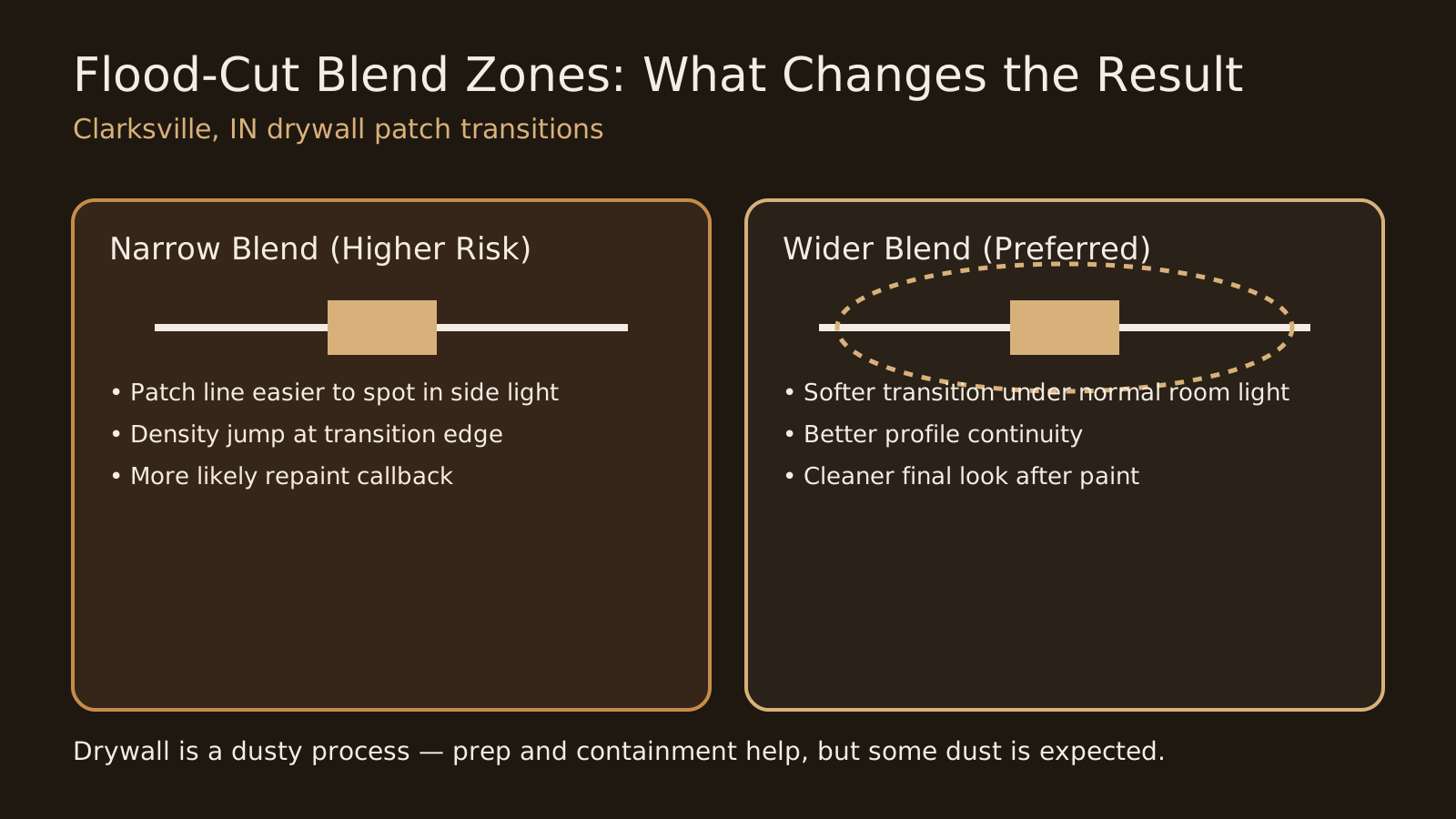
Most visible patch failures come from one of four causes: the patch zone is too narrow, the texture pattern is too uniform compared to surrounding variation, the transition gets over-sanded, or the final check happens only from straight-on viewing distance. Straight-on checks can look great. Side-light checks expose everything. Hallways, living rooms, and open plans with window light are where this usually shows first.
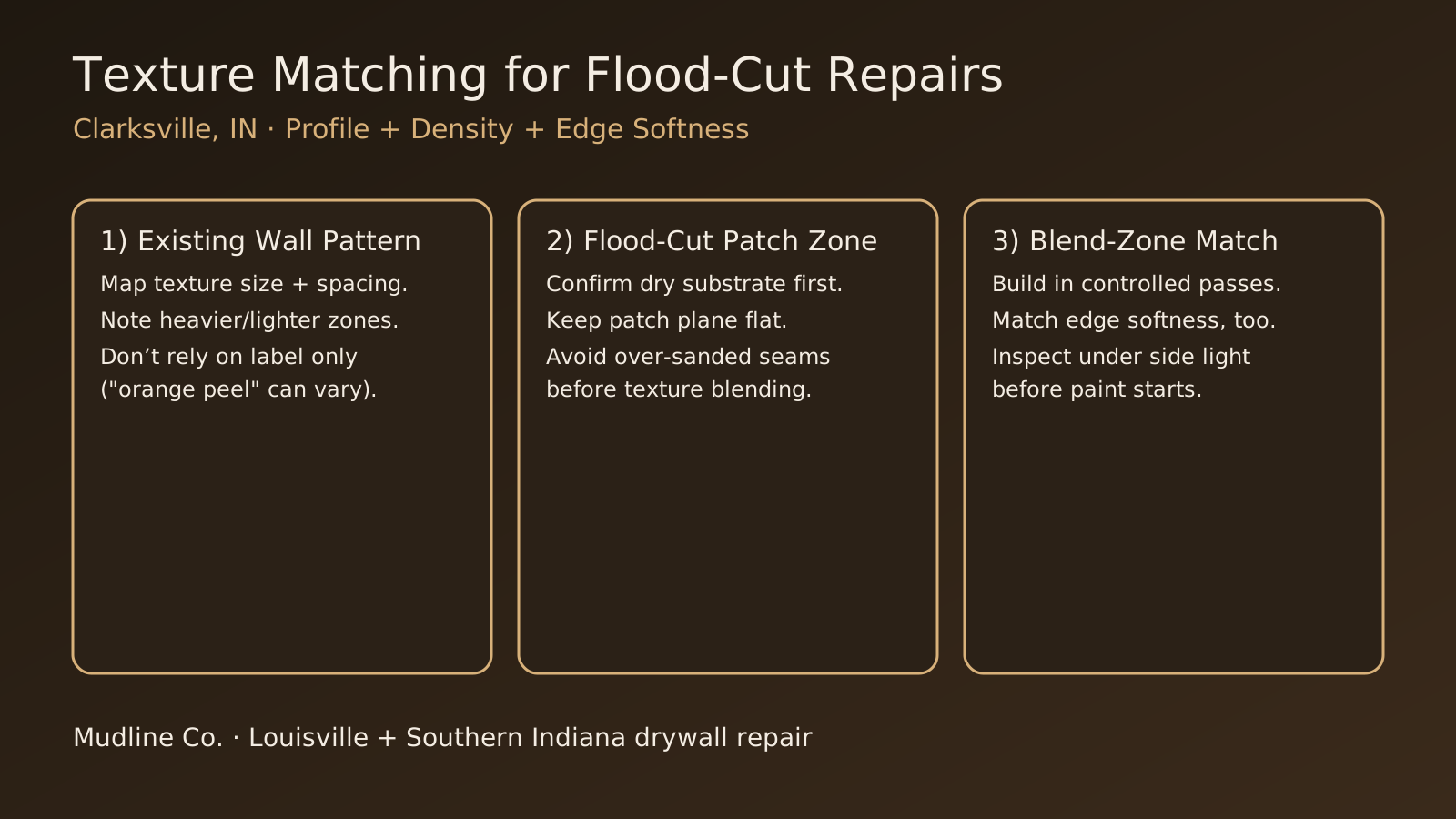
Another issue is trying to match texture type but ignoring texture behavior. For example, two walls can both be labeled “orange peel,” yet one has heavier clusters and softer drop-off while the other has tighter, sharper peaks. If those behaviors differ, the repair line can still flash after paint. Good matching means duplicating profile behavior, not just category labels.
A practical sequence for Clarksville flood-cut texture matching
The most reliable workflow starts before texture application. First confirm moisture-safe conditions and a stable patch plane. Then choose a blend zone wide enough for that room’s visibility, especially on long walls. Texture is built in controlled passes, not one heavy pass, and each pass is judged against surrounding density and edge softness. Final prep is done with restraint so you preserve pattern integrity instead of flattening the transition back into a visible stripe.
- Step 1 — Substrate readiness: verify dry conditions and proper patch plane before any finish work.
- Step 2 — Blend-zone mapping: define the feather area based on room lighting and wall visibility.
- Step 3 — Pattern calibration: test texture build in small sections before committing the full span.
- Step 4 — Light-angle QA: inspect from side light and long-axis room views, not just face-on.
How to decide between localized blend and wider skim strategy
Not every Clarksville flood-cut needs full-wall skim coating. In many bedrooms, utility spaces, or lower-contrast rooms, a localized blend can look excellent when the transition is planned correctly. But in high-visibility rooms—especially with strong side light, smooth paint, or long sightlines—a wider skim strategy can be the smarter call from the start.
The cost difference is usually smaller than the callback cost when a visible patch has to be reopened after paint. The right decision is room-specific: light direction, sheen target, and expected finish standard all matter. Treating every flood-cut the same is where avoidable rework begins.
Before final approval, stand in the room’s common viewing spots at the time of day with strongest window light. If the transition looks clean there, it usually stays clean after paint.
Clarksville context: flood repairs, timelines, and dust expectations
Flood-related drywall repairs are often schedule-sensitive, but speed should not override cure and quality checks. Rushing from patch closure to texture to paint can lock in defects that are far more expensive to fix later. Written scope should define what “paint-ready” means and what quality standard is expected in each room.
And just as important: drywall repair is a dusty process. We prep and contain residential work zones with plastic, floor protection, and daily cleanup to minimize spread, but there will still be some dust. Honest expectations lead to better project experiences than promising a “no trace” process that is not realistic for this trade.

What to include in your quote request for better texture outcomes
If you are requesting repair pricing, include room type, approximate flood-cut length/height, paint sheen goals, and whether the wall receives strong side light. Photos from two angles help. This gives the crew enough context to price localized blending versus wider skim options correctly on day one instead of changing scope midway.
For multi-room projects in Clarksville, ask for a room-by-room finish matrix. The matrix keeps expectations clear and avoids overbuilding low-visibility spaces while still protecting high-visibility rooms where patch quality is most noticeable.
Final takeaway
Flood-cut repairs in Clarksville do not have to stay visible. When substrate readiness, blend width, texture behavior, and light-angle quality checks are handled in sequence, repairs hold up visually after primer and paint. The goal is simple: not just a closed wall, but a finished wall that looks consistent in everyday living conditions.
Need flood-cut drywall texture matching in Clarksville? Send us room photos and project details and we will provide a written quote within one business day.