Sellersburg sits in a practical Southern Indiana lane: quick access to I-65, IN-60, Hamburg Pike, Silver Creek neighborhoods, and the wider Clark County remodel market. Homes range from older ranch layouts to newer open rooms with bigger windows, brighter LED lighting, and cleaner paint finishes. That mix makes drywall texture matching more important than it used to be. A patch that looked acceptable under dim warm bulbs can stand out under modern side light.
Current drywall and remodeling trends are pushing repairs toward cleaner expectations: smoother walls in main living spaces, more low-sheen paints that reveal surface inconsistency, more water-damage cutouts in basements and baths, and more homeowners asking for written scope before work starts. The trade answer is not to promise magic. The answer is to plan the repair, protect the work zone, match the texture behavior, and inspect it like someone will actually live with the wall after paint.
Why texture matching is harder than the texture name
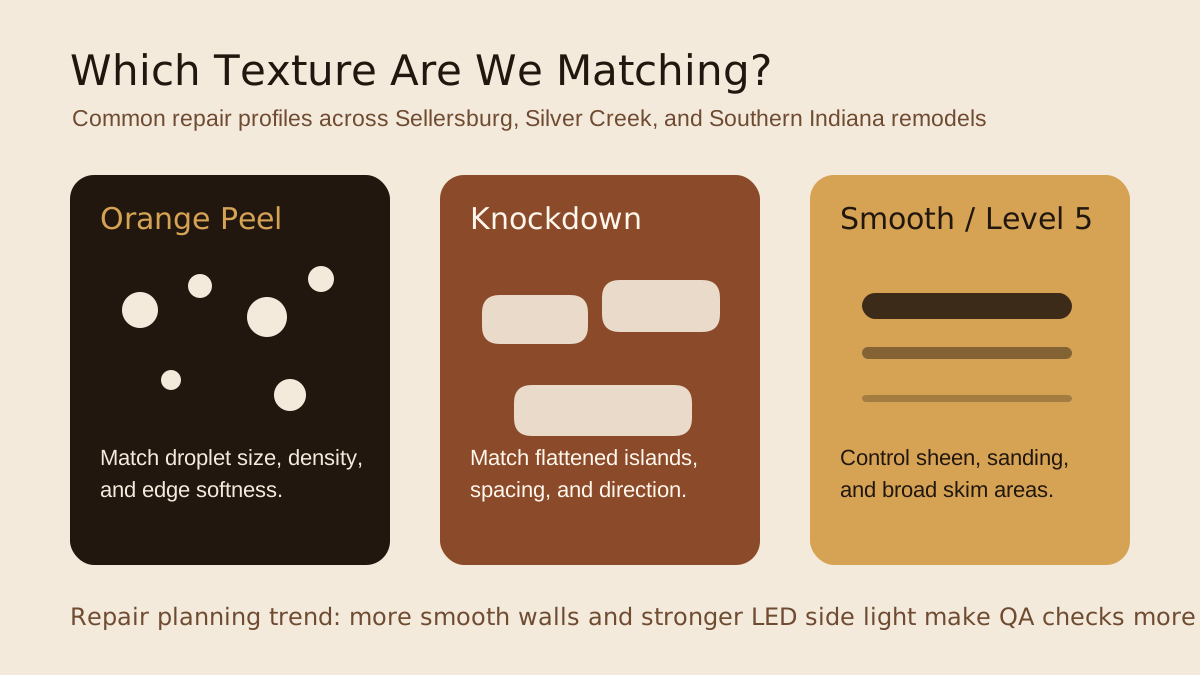
Homeowners often describe texture by name: orange peel, knockdown, light spray, heavy spray, or smooth. Those names help, but they do not finish the job. Two Sellersburg homes can both have orange peel and still need different repair techniques because the droplet size, peak height, paint layers, and age of the surrounding wall are different. The repair has to match behavior, not just vocabulary.
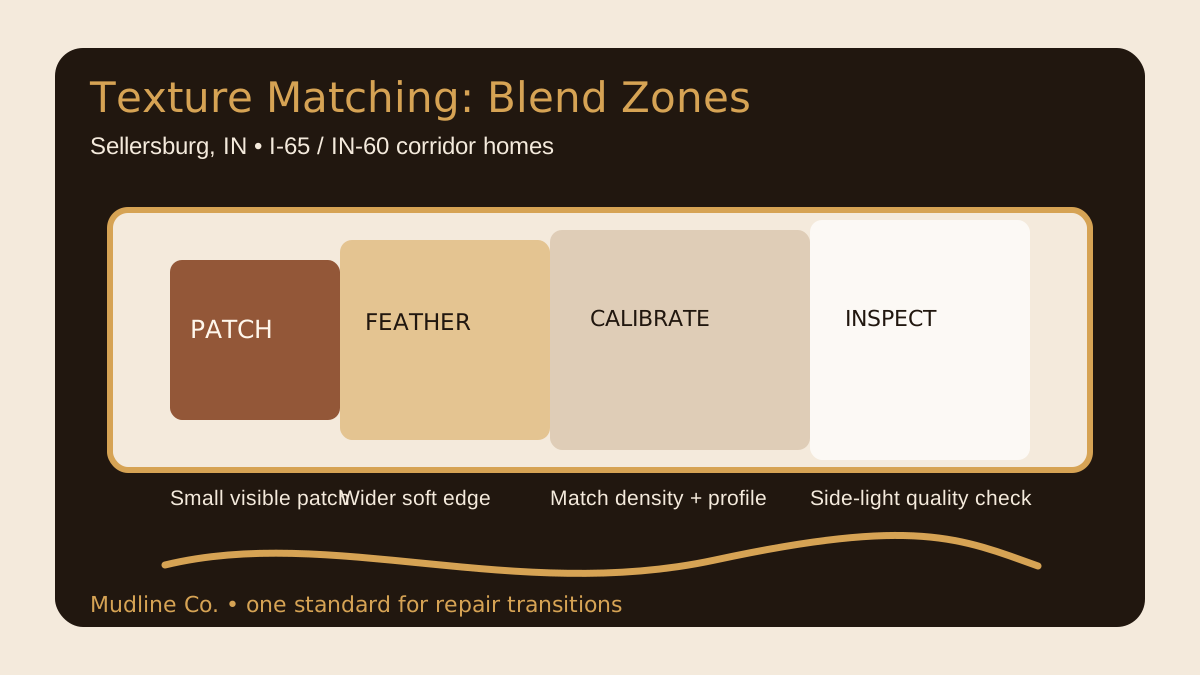
The hardest part is the transition. If the patch ends too abruptly, the eye sees a rectangle. If the feather area is sanded too flat, paint can flash around the repair. If the texture is sprayed too heavily, the patch looks like a new island in an older wall. Good texture matching is controlled blending from the repair outward until the surrounding field and the new work read as the same wall in normal viewing conditions.
Sellersburg homes: the lighting problem along open plans and additions
Many newer rooms around Sellersburg and nearby communities use wider openings, brighter ceiling fixtures, and larger windows than older closed-off floor plans. Those choices look good, but they are unforgiving to drywall repairs. Side light from a window along a long wall can reveal texture density changes, sanding scratches, and small humps that a straight-on view misses.
That is why inspection should happen from common viewing paths: the doorway into a living room, the hallway line, the sofa angle, and the direction daylight travels in the afternoon. If a repair only gets checked from two feet away, it may pass the wrong test. Mudline's standard is to think about how the room is actually used, then choose a blend width and finish approach that fits that visibility.
- Main living areas: wider blend zones and more side-light checks before paint.
- Bedrooms and closets: localized repairs can work well when texture density is controlled.
- Basements and bath walls: confirm moisture-safe conditions before any finish work.
- Smooth walls: consider broader skim strategy instead of a tiny patch with sharp edges.
A practical texture-matching sequence
The best sequence starts before the patch. First, confirm the board is stable, dry, and flat enough to finish. Next, define the feather area based on the room, not just the hole. A small nail pop in a closet needs a different plan than a water-damage cutout on a living-room wall facing a window. Then build compound in controlled coats, preserving the plane of the wall instead of creating a mound that has to be aggressively sanded later.
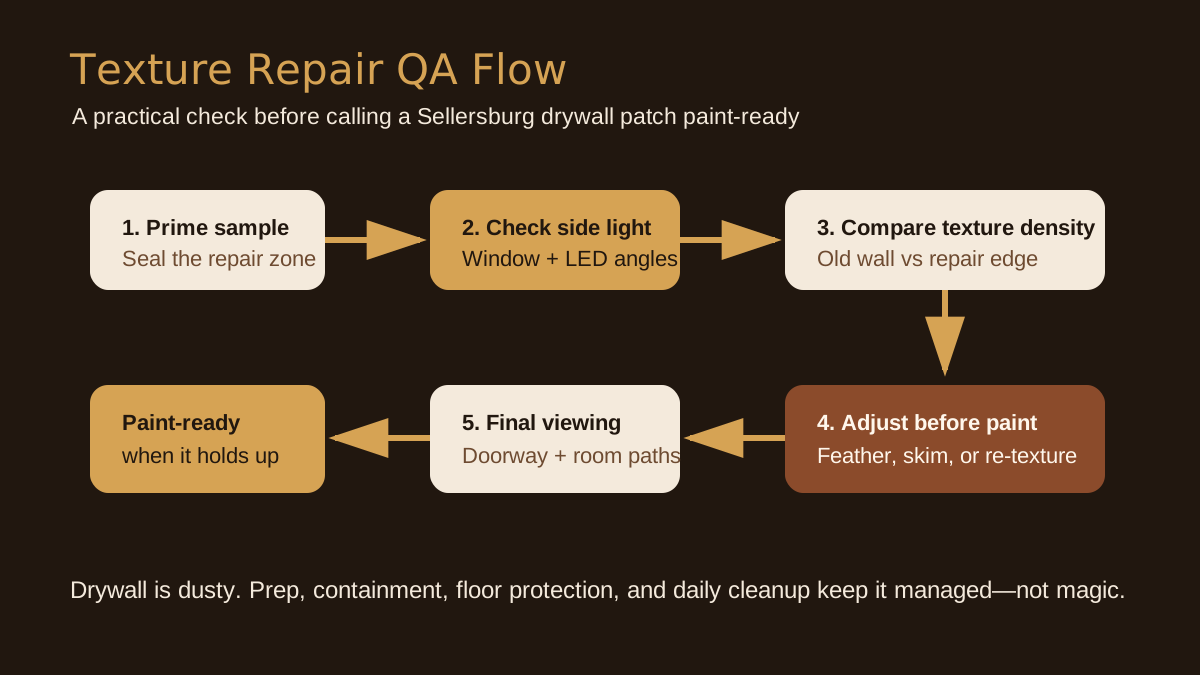
Texture calibration comes next. For orange peel, that means matching droplet size and density. For knockdown, it means matching the size, spacing, and flattening of the islands. For smooth walls, it may mean a wider skim and careful primer checks because there is no texture to hide minor plane changes. Once the surface is primed, inspect from multiple angles before final paint. Primer often reveals issues that bare compound hides.
- Map the repair: photograph the wall and note where daylight hits.
- Choose the blend width: expand the work area when the wall has strong side light.
- Build controlled coats: avoid heavy compound buildup that creates sanding problems.
- Calibrate texture: test pattern behavior before treating the full span.
- Prime and inspect: check the wall from the doorway, side angle, and normal use paths.
If a repair sits near a window or under bright recessed lighting, do not judge it only by touch. Step back, turn lights on, look across the wall, and check after primer before committing to final paint.
When a small patch is enough—and when it is not
A small patch is enough when the surrounding wall has forgiving texture, low side light, and a repair area that is not in a high-visibility sightline. Utility rooms, closets, and some bedrooms often fit this category. In those cases, good prep and careful pattern matching can produce a clean result without overbuilding the scope.
A wider skim or larger blend strategy makes more sense when the wall is smooth, the paint has any sheen, the patch is in a front room, or there are previous repair marks already competing for attention. This is common in remodels where electrical, plumbing, or built-in changes leave multiple holes across the same wall. Trying to spot-patch every opening can create a polka-dot finish. Sometimes the cleaner, more honest recommendation is to treat the whole visual field.
Dust, containment, and realistic expectations
Drywall is a dusty process — we do not pretend otherwise. Texture matching, sanding, and skim work all disturb compound. On residential repairs, the goal is to manage the work zone with plastic, floor protection, careful sanding practice, and daily cleanup. You will still see some dust, but a planned setup keeps it from spreading farther than necessary.
That expectation matters for Sellersburg homeowners living through a repair while work, school, pets, and normal routines continue around the project. A good quote should describe the room, the repair type, the texture goal, dust containment, and what “paint-ready” means. Clear scope prevents misunderstandings and helps the finished wall match the customer's actual expectations.
What to send for a better Sellersburg repair quote
If you are asking for a drywall texture matching quote, send photos from straight-on and side angles, the approximate size of the damaged area, the room type, the texture you think you have, and whether the wall gets strong daylight. Mention if the home is near I-65, IN-60, Silver Creek, or a nearby town like Henryville, Memphis, Clarksville, or Jeffersonville so scheduling and travel are clear.
For water-related repairs, include whether the source has been fixed and whether the area is confirmed dry. For remodel repairs, include how many openings need to be patched across the same wall. Those details help determine whether the right answer is a localized texture match, a wider blend, or a full visual-field skim.
Final takeaway
Drywall texture matching in Sellersburg is a finish-quality decision, not just a patching task. The repair has to match the surrounding wall's profile, density, paint behavior, and lighting conditions. When the patch is planned with a wide-enough blend zone and checked under real room light, it has a much better chance of staying quiet after paint.
Need drywall texture matching in Sellersburg or Southern Indiana? Send us room photos and project details and we will provide a written quote within one business day.